Best Time for a Golf Cart Tour in Florence
The panoramic hills route runs year-round, but the experience varies dramatically depending on when you go. A September morning at Piazzale Michelangelo, with the city just waking up below you, is a different thing entirely from the same terrace at noon in July with four tour groups arriving at once. This guide breaks down every season and every time of day so you can pick the window that suits your trip. When you're ready to look at what's available, the golf cart tours in Florence page has live availability across all operators.
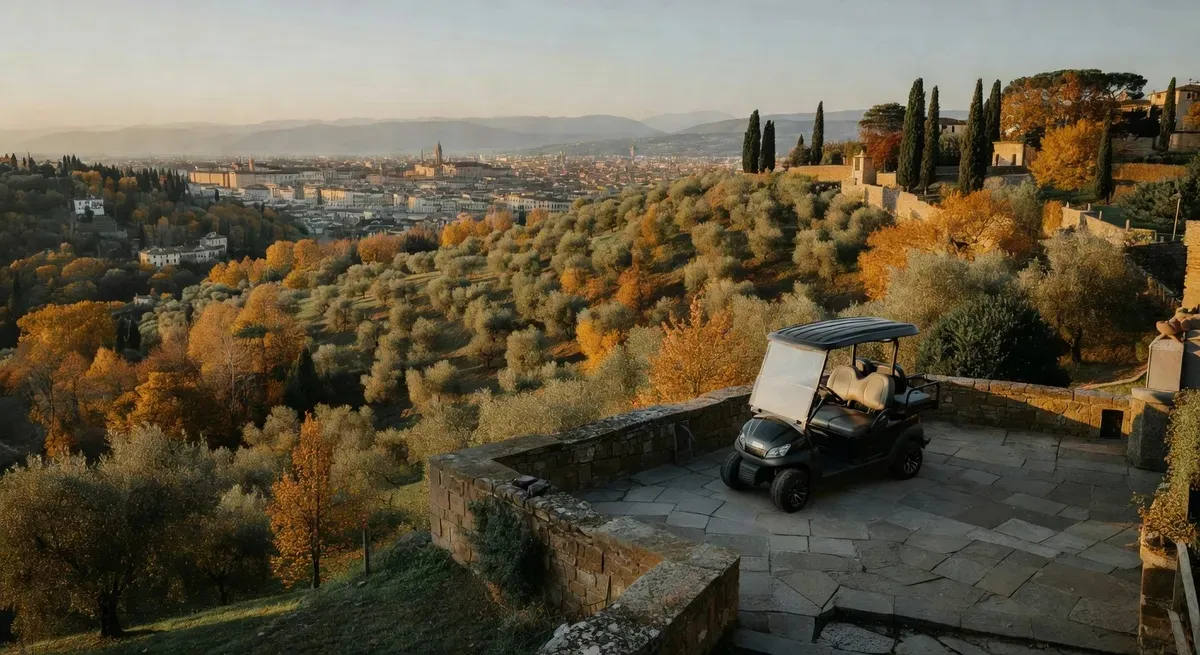
Season by Season
There is no single 'best' season — it depends what you're optimising for. The table below covers the key variables for each period.
| Season | Crowds | Weather | Light | Verdict |
|---|---|---|---|---|
| April–June | Building to peak by May | 18–26°C, some rain in April | Long days, warm afternoon light | Best overall — go early in April before crowds peak |
| July–August | Peak tourist volume | 30–36°C, humid | Harsh midday sun; golden evening light from 7pm | Book morning (9–11am) or evening (6–8pm) only |
| September–October | Shoulder season from mid-Oct | 20–28°C, stable | Low autumn sun, exceptional clarity | Joint best — often better than spring for photography |
| November–March | Thin crowds all month | 5–14°C, occasional rain | Low winter sun, dramatic shadows | Underrated — uncrowded, atmospheric, wrap up warm |
Spring: April, May, June
April is the sweet spot. Temperatures sit between 15 and 22°C, the olive trees on the Arcetri hillside are in new growth, and tourist volumes haven't reached the Easter-through-May peak yet. If your travel dates are flexible, the second half of April — after Easter week — is Florence at its most balanced: pleasant weather, manageable crowds, and long evening light.
May is popular because the weather is nearly perfect, but it's one of the busiest months on the hill. Piazzale Michelangelo at noon in May has a steady stream of coaches. Book a morning departure — 9 or 10am — to reach the viewpoints before the crowd noise builds. Morning light from the east also falls directly onto the Duomo across the valley, which makes for better photos.
June is still excellent, though temperatures are climbing toward summer. The long days mean late afternoon departures (around 5pm) catch the city in beautiful low-angle light before the 7–8pm golden hour. June evenings on the Piazzale are warm enough to linger at the terrace without a jacket — which is not true of April.
Summer: July and August
A July or August golf cart tour is perfectly doable — just avoid the middle of the day. The hilltop roads at Arcetri and around San Miniato al Monte sit 3–5°C cooler than the city below, but 32°C in the sun on an open-sided cart is still uncomfortable for most people. Operators see lower morning and evening bookings in July and August specifically because travellers underestimate the heat; that makes those slots easier to get.
The case for an evening tour in summer is strong. A 6pm departure puts you at Piazzale Michelangelo around 7–7:30pm, when the sun drops over the hills behind you and the city turns amber. The Duomo, the towers of Santa Croce, the curve of the Arno — all of it in warm light for 30–40 minutes before sunset. It's the best the city looks all year, and the panoramic terrace is quieter than it was four hours earlier.
August is also when many Florentines leave the city for the coast. That removes some local traffic from the hill roads, which makes the Arcetri and Bobolino sections of the route feel more peaceful than they do in May. The trade-off is that some smaller operators reduce their schedules in mid-August.
Check availability a little further ahead than usual.
Autumn: September and October
September is, for many regular visitors to Florence, the best month of the year. The summer heat breaks after the first week, temperatures settle to 20–26°C, and the olive harvest begins on the Arcetri hillside in October. The early-morning light in September is exceptionally clear — the haze that builds through summer lifts, and the view from Piazzale Michelangelo to the Duomo is sharper than at any other time of year.
September is still busy — it's a peak booking month for golf cart tours. The crowd pressure eases noticeably from mid-October as school terms start across northern Europe and the US. An October morning tour, particularly on a weekday, can feel remarkably private for a city that sees nearly ten million visitors a year.
The autumn light on the Tuscan hills is worth mentioning on its own terms. The olive trees shift toward silver-green, the light comes in lower, and the city takes on a warmth that the bleached summer palette doesn't have. If photography is part of why you're going, September and October are the seasons to plan around.
Winter: November to March
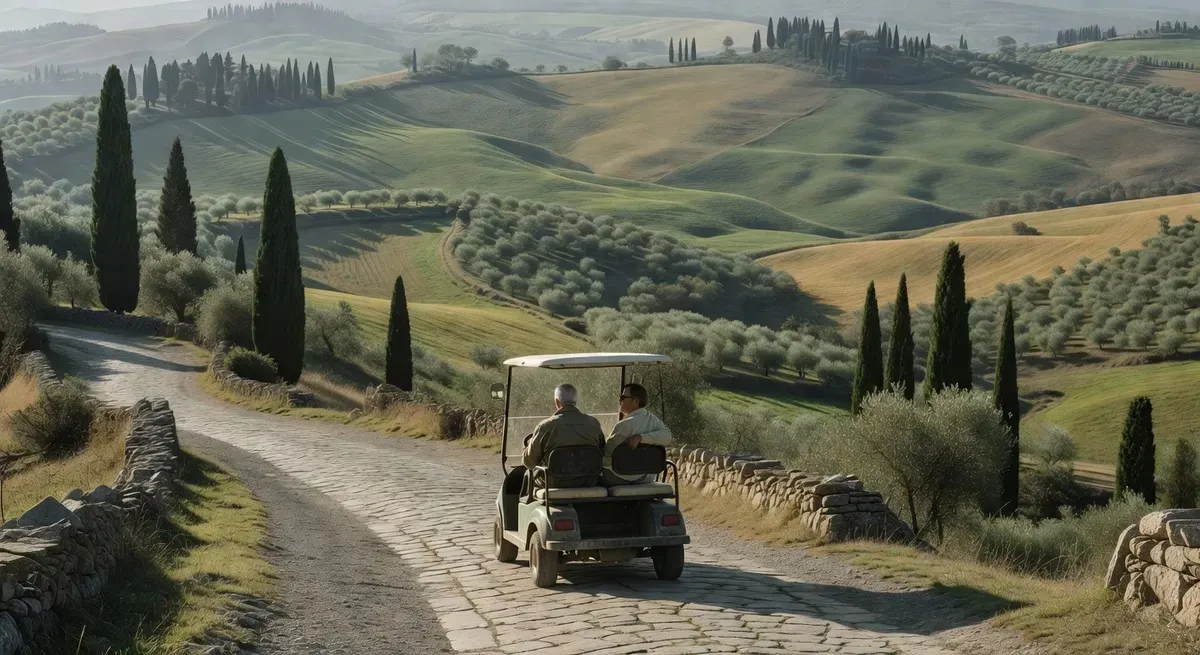
Florence in winter is underrated, and the golf cart tour is one of the activities that translates especially well into the cold months. Crowds on the panoramic hill route are thin — sometimes your group is the only one at Piazzale Michelangelo. The Basilica San Miniato al Monte, founded in 1013 AD and one of the finest Romanesque buildings in Italy, is at its most atmospheric on a clear winter morning when you can hear the monks' chants without a background murmur of tour groups.
Temperatures on the hill roads average 5–10°C and can dip to near freezing on January mornings. The hilltop route sits 3–5°C below city temperatures, so dress for that gap even if the city felt mild when you left your hotel. The operators who run in winter are well prepared — most provide blankets on the cart, and several have partially enclosed vehicles for cold or wet conditions.
Rain is the main risk in November and December. Tours generally reschedule rather than cancel in persistent rain, and operators communicate this clearly when you book. A damp morning after overnight rain is often fine — the air is clean, the hills smell of wet earth, and the views tend to be particularly sharp.
- Christmas week: quiet for a city-wide holiday, though some operators pause on 25 December and 1 January
- January: the least-visited month of the year across Florence; morning slots on the cart tour often available same-day
- February: still very quiet; almond blossom begins on the warmer south-facing hillsides around Arcetri by late February
- March: crowds build from mid-month as spring travel picks up — book a few days ahead rather than same-day from mid-March on
Morning vs Evening: Which Is Better?
Morning tours (departing 9–11am) give you the hill to yourselves. The Piazzale Michelangelo viewpoint — 104 metres above the Arno — faces west, so morning light falls on the city from behind you as you look across. The Duomo is lit directly, the city is still waking up, and the terrace is quiet.
In spring and autumn, morning is the straightforward recommendation.
- Cooler air — important from June through September
- Fewer coaches at Piazzale Michelangelo
- Hotel pickup typically available at 9am
- East-facing light onto the Duomo and city
Evening tours (departing 5–7pm depending on season) capture the golden hour from the west-facing Piazzale. As the sun drops behind the Florentine hills, the city turns amber and the Duomo dome glows. It lasts roughly 30–40 minutes and it's one of the genuinely spectacular things Florence offers on any given summer evening. The Basilica San Miniato al Monte, which closes to visitors in the late afternoon, is sometimes accessible for an exterior stop as the monks prepare for evening vespers.
In July and August, the evening departure is the better choice simply because of temperature. In April, October, and winter, the morning wins — the light is calmer, the days are shorter, and the evening can be cold or dark by the time the tour ends.
How Weather Affects the Route
The panoramic hills route runs on public roads outside the historic centre. Rain affects it differently from a walking tour — light rain is manageable on most carts, and the Arcetri olive-grove section has natural overhead cover. Persistent or heavy rain prompts operators to reschedule, usually to the next available slot.
Fog in Florence is most common in November and December, and when it sits below Piazzale Michelangelo, the view from the terrace is reduced or completely blocked. Fog typically burns off by 10–11am on cold but clear winter days. If fog is forecast and the view matters to you, a mid-morning departure (10–11am) is safer than an early start. Operators generally don't cancel for fog unless visibility on the roads themselves is dangerous.
Strong wind is the one condition that prompts genuine operational pauses on the open-sided carts. The hilltop roads above 200 metres are exposed, and the Piazzale Michelangelo terrace catches whatever the Arno valley funnels upward. Wind strong enough to affect the cart is uncommon in Florence — the city sits in a bowl — but it does occur in winter.
Most operators monitor conditions the morning of and will contact you if rescheduling is needed.
Timing Your Visit — Common Questions
What is the best month for a golf cart tour in Florence?
April (after Easter week) and September are consistently the best months — pleasant temperatures, good light, and manageable crowds. October is excellent if you don't mind slightly shorter days and want the thinnest crowds of the autumn season. Avoid the middle of the day in May, July, and August, when the panoramic viewpoints are at their busiest.
Is a morning or evening golf cart tour better in Florence?
Morning is better in spring, autumn, and winter — cooler air, quieter viewpoints, direct light onto the Duomo. Evening (6–8pm) is the clear winner in summer, when the golden hour sunset from Piazzale Michelangelo is genuinely exceptional and temperatures have dropped to something manageable. For the golden hour specifically, a July or August evening departure is one of the most scenic experiences Florence offers.
Are golf cart tours in Florence affected by rain?
Light rain rarely cancels a tour — operators adapt with covered vehicles or reschedule to the next available slot. Heavy or persistent rain prompts rescheduling rather than a cancelled booking. All tours listed on this site include free cancellation up to 24 hours in advance, so if the forecast looks bad, you can cancel the evening before without losing your money.
How far ahead should I book a golf cart tour in Florence?
In peak months (April, May, September) book 3–5 days ahead, especially for private panoramic tours on weekends. In June and October, 2–3 days is usually fine. In winter (November–March) and in July–August (due to lower demand at midday), same-day booking is often possible. There's no cost to booking early since cancellation is free.
Is the view from Piazzale Michelangelo worth the tour in winter?
Yes — winter is arguably when the view is most dramatic. The city is low-lit, the air is clear, and the terrace is quiet enough that you can absorb the scale of it without a crowd. Piazzale Michelangelo sits 104 metres above the Arno, and on a clear winter day you can see the hills behind Fiesole on the far side of the valley. Wrap up: it's 3–5°C cooler on the hill than in the city.
Do tours run on public holidays in Florence?
Most operators run on Italian public holidays, though a few pause on 25 December and 1 January. Booking in advance is more important around public holidays than on regular days, as some slots fill with Italian domestic visitors. Easter week is the single most crowded period on the panoramic hill route — if you're visiting at Easter, book as early as possible and choose a morning departure to beat the midday volume.