Golf Cart Tour Florence in Winter: Is It Worth It?
The short answer: yes. Golf cart tours Florence operators run their routes year-round, and November through February is the season when the city's most-visited viewpoints — Piazzale Michelangelo, Basilica San Miniato al Monte, the Arcetri hilltop — are finally calm enough to actually appreciate. The trade-off is cold. The open-air electric carts feel every degree of Tuscany's winter air, and the hilltops above Arcetri run 3 to 5°C colder than the city below. This guide covers what changes, what stays the same, what to wear, and which tour handles the cold best.
Do Golf Cart Tours Run in Winter in Florence?
All the operators listed on this site run tours throughout the winter months, including December and January. Florence does not shut down in the off-season the way beach resorts do — the city's cultural calendar continues year-round, and tour operators maintain full schedules.
The standard cancellation trigger is rain or strong wind that affects safety on the hillside routes. Light drizzle alone does not cancel tours; heavier rain that makes the open cart uncomfortable and the stone roads slippery is a different matter. Operators make that call on the day, typically with a few hours' notice.
Most platforms offer free cancellation and rebooking when weather forces a cancellation — confirm the specific policy when you book.
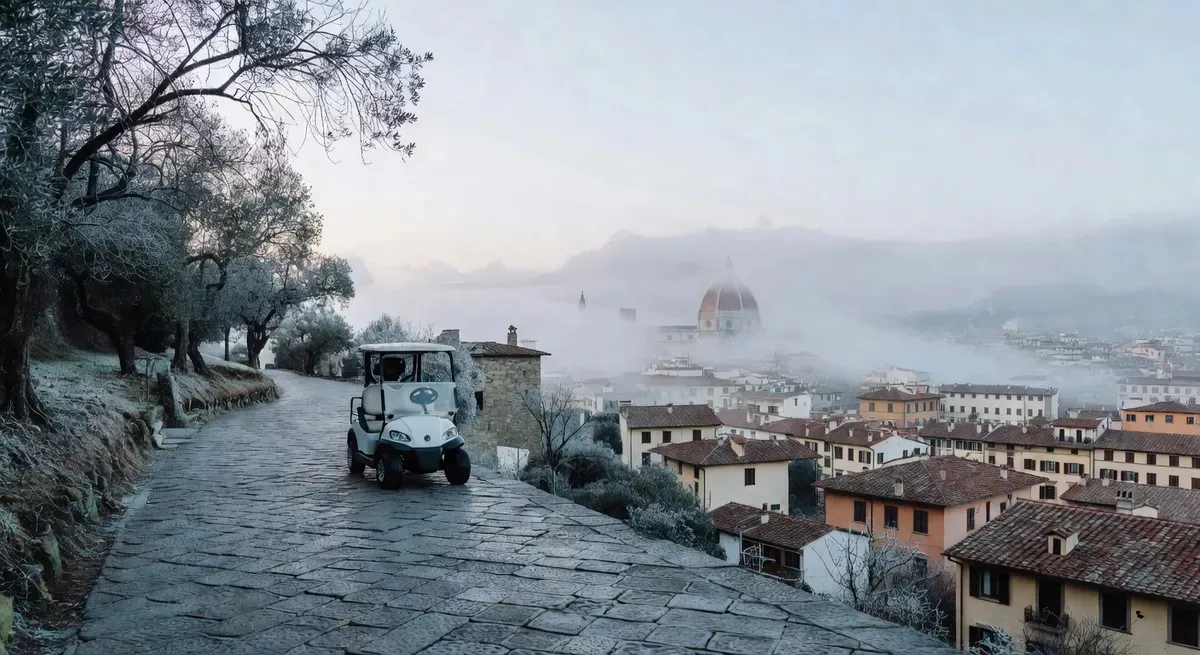
Frost is possible on the Arcetri section of the route from late November onward, particularly on early-morning slots. The roadbed on the hilltop olive grove route is stone and compacted earth — carts handle it well, but guides adjust speed in icy conditions. Morning slots on clear winter days are rarely a problem; the concern is more specific to overnight frost before the sun has had a chance to clear the shaded sections of the lane.
What's Different About a Winter Golf Cart Tour
Three things change meaningfully in winter: the crowds, the light, and the temperature. The first two are in your favour. The third requires preparation.
Crowds. From November through early March, Piazzale Michelangelo is a different place. On a weekday morning in January you can stand at the balustrade with almost no one else there — a stark contrast to the shoulder-to-shoulder summer experience. The hilltop route through Arcetri is similarly quiet.
Christmas week (December 23 to January 6) brings some crowds back for the markets in the city centre, but even then the hilltops remain calmer than any July or August day.
Light quality. Winter in Florence produces two kinds of light that summer simply cannot match. On clear days the sun stays low in the sky throughout the morning, throwing long golden light across the Duomo and Arno from angles that feel almost horizontal by noon. The result is that photographs taken from Piazzale Michelangelo in January often have a warmth and drama that midsummer high-noon shots lack entirely.
Misty mornings — common in November and February — create a completely different atmosphere: the Arno and the bridge arches disappear into soft fog while the Duomo dome emerges above it. Atmospheric in a way that is impossible to plan for and unexpectedly beautiful.
Temperature on the cart. This is the honest downside. The electric carts are open-sided — they have a roof but no windscreen or doors. At 5°C in the city, the hilltop feels closer to 1 or 2°C. At speed on the Arcetri lane the wind chill is noticeable.
It is not dangerous, but you will feel it. Some operators provide blankets — call ahead and confirm before booking if this matters to you.
| Month | City temp | Hilltop temp | Crowds | Highlights |
|---|---|---|---|---|
| November | 9–14°C | 5–10°C | Very low | Quietest month, mild for winter, golden foliage on hilltops |
| December | 5–10°C | 2–6°C | Low (Christmas week moderate) | Christmas lights in the centre, empty hilltops, festive mood |
| January | 4–9°C | 1–5°C | Very low | Coldest month, sharpest light quality, near-empty Piazzale |
| February | 5–11°C | 2–7°C | Low | Early almond blossom on Arcetri, occasional warm sunny days |
What to Wear for a Winter Golf Cart Tour in Florence
Layer for the hilltop, not for the city. The temperature difference between the Oltrarno streets and the Arcetri ridge is real, and the wind on the open cart amplifies it further.
Base layer — thermal merino or synthetic base layer on your torso and legs. Cotton feels fine indoors but traps cold air on an open cart. Merino is worth it if you have one; any close-fitting thermal works.
Mid layer — a fleece or insulating jacket. This is what you want to be able to zip up when the cart is moving and unzip when you stop for photos in direct sun.
Outer layer — a windproof or waterproof jacket. Not a heavy winter parka — just something that blocks wind and light rain. The cart provides overhead cover, but the sides are open.
Extremities — gloves and a scarf are genuinely useful, not optional niceties. Hands on a moving open cart in 5°C air go cold quickly. A light knit or fleece scarf around the neck makes a noticeable difference.
A hat is worth packing; whether you need it depends on the day.
Footwear — waterproof shoes or boots with grip. You will step off the cart on cobblestone and occasionally wet stone terraces. The stops at Piazzale Michelangelo and San Miniato al Monte involve short walks on uneven stone surfaces that become slippery in damp conditions.
The blanket question. Some operators keep folded blankets on the cart for cold-weather guests. This varies by operator and by season — it is not a universal policy. If you are particularly sensitive to cold, call ahead when booking and ask specifically whether blankets are available on the tour you are booking.
Do not assume.
Which Tour Is Best in Winter
In cold weather, two practical factors matter more than they do in summer: hotel pickup (so you do not have to find a meeting point in the cold) and flexible scheduling (so you can book the warmest slot of the day).
Tour 1 — Eco Tours Italia (Panoramic Hills & Piazzale Michelangelo, from $107). Morning and afternoon slots available, with hotel pickup included. In winter, the afternoon slot starting around 1:30 pm is the warmest part of the day and still catches the low golden light on the Duomo. The 1 hr 45 min route covers the full Arcetri olive grove lane, Galileo's villa, the observatory, Piazzale Michelangelo and San Miniato al Monte.
The private cart means the guide adjusts pace freely — helpful when you want to linger at a sunny viewpoint and skip through a shaded lane at speed.
Tour 2 — Flower Travel (City Highlights with Hotel Pickup, from $73). Hotel or Airbnb pickup from anywhere in the historic centre, and flexible departure times. In winter this flexibility is particularly useful — you can book a midday slot and avoid the coldest morning hours. The panoramic upgrade option adds Piazzale Michelangelo to the standard city route.
It is also the most accessible entry price for a first-time visitor who wants to try a golf cart tour in winter before committing to the longer panoramic route.
Timing advice for winter. The best slot is 11 am to 2 pm — when the winter sun is highest, the hillside has warmed slightly, and the light on the Duomo is at its richest. Early-morning slots (8 or 9 am) are the quietest but the coldest; if you are not specifically chasing an empty Piazzale photograph, midday serves you better in winter. Late-afternoon slots in December and January mean you will be on the hilltop at or after dusk — which is atmospheric but cold.
Frequently Asked Questions About Winter Golf Cart Tours in Florence
Do golf cart tours run in December and January in Florence?
Yes. All the operators on this site run year-round, including December and January. Florence is not a seasonal destination — the city's museums, churches, and panoramic viewpoints operate as normal through winter. Tour schedules may offer slightly fewer time slots than in peak summer, but the routes remain identical.
Is it too cold for a golf cart tour in winter?
It is cold on an open cart in January — the hilltops above Arcetri reach 1 to 5°C and the wind chill on a moving cart is real. Whether 'too cold' depends on your personal tolerance and how you dress. Visitors who come prepared — thermal layers, windproof jacket, gloves, scarf — consistently report that the cold is manageable and the quiet hillsides make the experience more memorable than a crowded summer run. Visitors who show up in a light jacket expecting mild Italian weather are less comfortable.
Do the carts provide blankets in winter?
Some operators keep blankets on the cart in cold weather; others do not. It varies by operator and is not a standard policy. Call ahead or message the operator through the booking platform before your date and ask specifically. Do not assume blankets will be available — dress as if they will not be.
Do tours cancel in rain? What is the refund policy?
Light rain alone does not cancel tours. Heavy rain or strong wind that affects safety on the hillside routes is the standard cancellation trigger. Operators make the call on the day, typically a few hours before the tour. Most platforms offer full refund or free rebooking in weather cancellations — confirm the specific policy on the listing before booking. Free cancellation for bookings cancelled 24 hours in advance is standard across all tours listed on this site.
What is the best month to visit Florence in winter?
November is the quietest and mildest month of the winter window. Temperatures are still reasonable (9 to 14°C in the city), the hilltops have autumn foliage, and the crowds have dropped sharply since October. February is a close second — it is cold but often has clear, sunny days, and early almond blossom appears in the Arcetri olive groves by late February. January is the coldest and quietest month — genuinely peaceful on the hilltops, but dress accordingly.
Is Piazzale Michelangelo crowded in winter?
Dramatically less so than in summer. On a weekday morning in November or January, the terrace can be nearly empty — a completely different experience from the shoulder-to-shoulder crowds of July and August. Christmas week (December 23 to January 6) sees some increase as holiday travelers arrive for the markets, but even then the hilltops remain far calmer than any peak-season day.