What to Wear on a Florence Golf Cart Tour — Season-by-Season Packing Guide
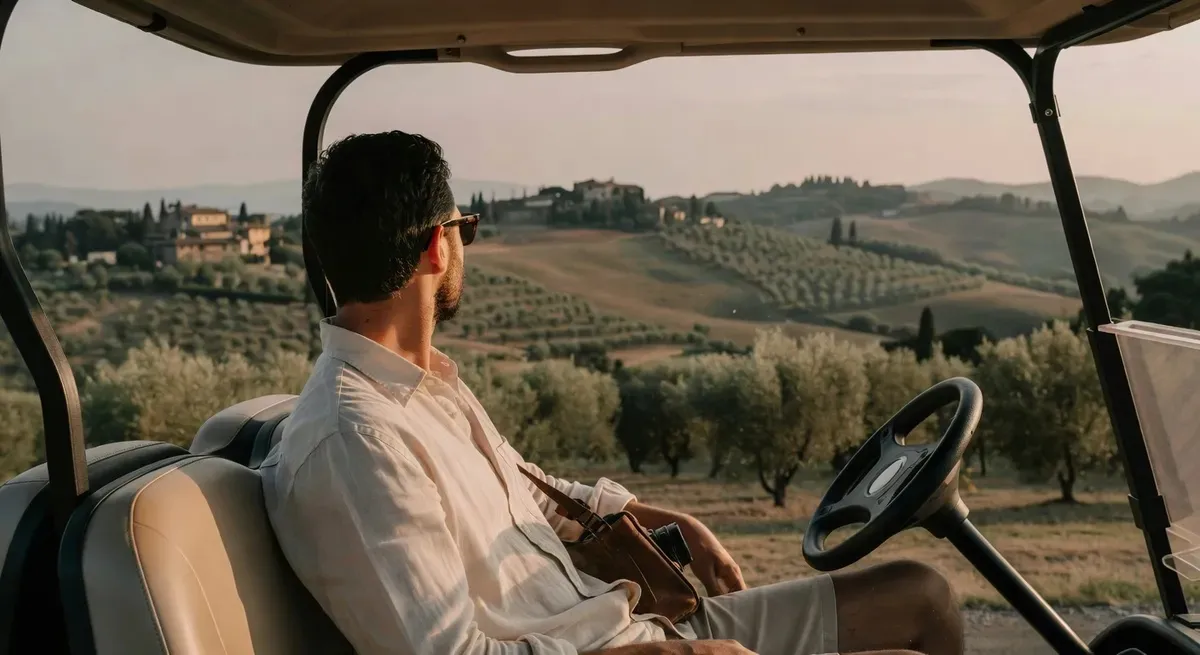
The electric golf carts that run the Florence panoramic hills route are open-sided — the roof is overhead, but the sides are open to the air, wind, and whatever weather the season decides to bring. What you pack depends almost entirely on when you visit. A July afternoon on the cart feels nothing like a December morning, and even within a single day the hilltop temperature at San Miniato al Monte can be noticeably colder than the city below. This guide covers what to wear for every season on a golf cart tour Florence — including a table for quick reference, a short list of things always worth bringing, and a few items that are better left at the hotel.
Florence Golf Cart Tour: What to Wear by Season
Florence sits at 50m above sea level in the Arno valley, but the panoramic hills route climbs to around 104m at Piazzale Michelangelo and continues to San Miniato al Monte and the Arcetri area beyond. The hilltop feels 3–5°C colder than the city below — a gap that matters in winter and early spring, and that makes a light layer useful even on a warm summer morning.
Winter (December–February): Layer properly or you will regret it
City temperatures run 5–12°C at street level. At Piazzale Michelangelo and beyond, factor in an additional 3–5°C of wind chill from the open cart at speed — you can be sitting in 3°C air with a light breeze at the top. A warm jacket is not optional in winter; it is the one item that makes or breaks the experience.
Thermal base layers under your outer clothing add useful warmth without bulk. Gloves and a scarf are worth the small bag space — cold hands and an exposed neck make a scenic ride miserable. The views in winter are exceptional (clear air, no summer haze, the possibility of snow on the distant Apennines), but only if you are dressed for them.
Spring (March–May): Light layers with a windproof option
Spring in Florence runs 12–22°C and is arguably the best season for the cart tour. The mornings are cool enough to be comfortable and the afternoons warm up gradually through April and May. The key is layers you can remove and stow — a light jacket or zip-up fleece that you can peel off mid-tour as the sun climbs.
Morning departures in March still feel like winter at the hilltop; afternoon departures in May are closer to summer. The olive groves and Tuscan hills are lush and green in spring, which makes the Arcetri and Bobolino sections of the route particularly scenic.
Summer (June–August): Protect yourself from the sun
Florence in summer is hot. City temperatures reach 25–35°C in peak summer, and the cart tour runs during the heat of the day on many bookings. The hilltops are cooler — often 3–5°C below the city, with a breeze at speed — which provides some relief, but the sun at altitude is intense.
Light, breathable fabrics are the priority: linen, lightweight cotton, or technical travel fabric. A hat is essential rather than optional — you are moving through open countryside with no shade canopy and the sun sits high in the sky. Sunscreen on exposed skin before you board, and a top-up in your bag.
Autumn (September–November): Windproof layer for the hilltops
Autumn temperatures range 14–24°C and the conditions on the panoramic hills vary more than any other season. Early September feels like late summer; by November you are back in jacket territory. The specific variable in autumn is wind at the hilltop viewpoints — Piazzale Michelangelo and San Miniato face west and south-west, which means afternoon wind is common.
A windproof outer layer (a shell jacket or a close-weave cotton jacket) cuts the chill without the bulk of a winter coat. Autumn light on the Arno valley and the terracotta roofline is among the most photographed in Tuscany for a reason — it is worth being comfortable enough to stand still and take it in.
Quick reference table by season:
| Season | City temps | Top | Bottom | Footwear | Extra |
|---|---|---|---|---|---|
| Winter (Dec–Feb) | 5–12°C | Warm jacket + thermal layer | Warm trousers or jeans | Closed-toe, non-slip | Gloves, scarf — not optional |
| Spring (Mar–May) | 12–22°C | Light jacket or zip fleece | Jeans or light trousers | Closed-toe, flat | Layer you can remove mid-tour |
| Summer (Jun–Aug) | 25–35°C | Light breathable shirt/top | Light trousers or shorts | Closed-toe, breathable | Hat + sunscreen essential |
| Autumn (Sep–Nov) | 14–24°C | Windproof shell or jacket | Jeans or trousers | Closed-toe, flat | Wind picks up at hilltop viewpoints |
5 Things to Always Bring
Regardless of season, five items earn their place on the cart every time.
1. Camera or charged phone
The views from Piazzale Michelangelo — the Duomo, the Campanile, the Arno looping through the valley, the hills beyond — are among the most photographed in Italy for a reason. You will want to stop and take pictures at multiple points on the route, and the cart makes this easy because the guide pulls over at the viewpoints rather than passing them at speed. If you use the express panoramic Florence golf cart tour with pro photos, professional photos are included, but having your own camera means capturing the candid moments between the official stops.
2. Sunscreen
The open cart provides no shade. From late March through October the UV index at Florence's latitude is high enough to cause a burn in under 40 minutes on fair skin. Apply before you board — the tour runs 60 to 105 minutes in direct sun depending on the route.
Bring a small bottle for a mid-tour reapplication if you run hot or sweat. This applies even on overcast summer days when UV penetrates cloud cover.
3. Water bottle
Most tours do not include water as standard, and the hilltop route has no cafes or shops between departure and Piazzale Michelangelo. A 500ml bottle is enough for a 90-minute tour; a full litre is better in summer. Fill it at your hotel or from one of Florence's many public water fountains (nasoni) before you board.
The cart is open-air so drinking on the move is comfortable — no motion-sickness issues.
4. Hat
Essential in summer, useful in spring and autumn, and worth tucking in a bag year-round for the hilltop wind in winter. A baseball cap or a wide-brim sun hat works for summer; a warm beanie for November through February. The carts move at 20–30km/h on the open hill roads, which creates enough airflow to lift a loosely fitted hat — a chin strap or a snug fit keeps it on.
5. Closed-toe shoes
The carts have foot wells and metal floor plates, and the boarding step is a small one from the road. Closed-toe shoes with a flat, non-slip sole are the standard recommendation across all operators. Most of the tour is riding rather than walking, but there are short walking stops at the viewpoints — Piazzale Michelangelo and San Miniato al Monte both involve a short walk from where the cart parks.
Flat shoes with grip work; heels do not.
What to Leave Behind
A few items that seem like they belong on a sightseeing day create specific problems on an open-air cart tour.
Large backpacks
The carts seat 4–6 people. A full hiking-style backpack takes up a seat's worth of lateral space and will need to go on your lap or between your feet for the entire ride — neither comfortable for 90 minutes. A small day bag or a cross-body pack that fits on your lap is fine.
If you are already carrying a full pack because you are heading to the airport afterwards, ask the operator about any storage options before you board.
Heels and formal footwear
The boarding step, the cobblestone surfaces at the viewpoints, and the metal floor plates inside the cart make heels a practical hazard rather than just a style mismatch. Flat, closed-toe shoes are the reliable choice. This is also relevant for San Miniato al Monte, which requires a short uphill walk from the cart park on an uneven stone path.
Fragile or oversized items
An open-sided moving vehicle on hill roads is not the right environment for a glass bottle of olive oil from the market, a canvas print from the gallery, or a large umbrella. Flat-packed, soft bags that fit in a lap or under a seat are the practical limit. If you are mid-shopping-trip and carrying something delicate, it is worth returning it to your hotel before the tour.
Heavy winter coats (spring and autumn)
In shoulder seasons, a thick down jacket is often unnecessary but also awkward to deal with mid-tour when the temperature rises. A lighter, packable windproof layer that compresses into a pocket works better — you can put it on and take it off without it taking over the cart.
Frequently Asked Questions — What to Wear on the Florence Golf Cart Tour
Can I wear sandals on the Florence golf cart tour?
Sandals are not recommended. The carts have metal floor plates and a boarding step from the road, and the viewpoint stops at Piazzale Michelangelo and San Miniato al Monte involve short walks on cobblestone and stone paths. Closed-toe shoes with a flat, non-slip sole are the practical standard. Flat sandals with heel straps are the borderline case — workable, but less comfortable than proper flat shoes once you are walking on the hilltop paths.
What happens if it rains during the tour?
The carts have a roof overhead, which protects against light rain. In heavy or sustained rain, most operators will reschedule or offer alternatives — Viator's free cancellation policy covers weather-related cancellations up to 24 hours before. For light drizzle, a packable rain jacket or a compact umbrella kept in your bag is a reasonable precaution. The hills route is particularly exposed in wind-driven rain, so if the forecast looks genuinely bad, contact your operator through Viator the day before rather than waiting.
Do I need a jacket in summer?
A light layer is worth bringing even in summer. The hilltop at Piazzale Michelangelo is 3–5°C cooler than the city below, and morning tours in June can start at 20°C in the street but feel breezy at altitude. For afternoon summer tours in July and August the priority is sun protection rather than warmth — hat, sunscreen, and breathable fabric. An ultra-light packable jacket takes up almost no space and gives you options if the temperature drops unexpectedly.
Is there storage on the cart for bags or jackets I want to take off?
Storage inside the golf cart is limited to what fits under the seat or on your lap. There is no separate luggage compartment in the cart itself. For small day bags and removed jackets, tucking them under the seat is the standard approach. If you have larger items, ask your operator when booking — some guides have a separate support vehicle and can arrange storage for the duration of the tour.
Is there a dress code to enter San Miniato al Monte?
Yes. San Miniato al Monte is an active Romanesque basilica with a monastic community, and the standard dress code for Italian churches applies: shoulders must be covered to enter the building. This does not affect the viewpoint outside (which is free and open to all), but if you want to step inside the church, bring a scarf or a light cardigan that you can pull on at the entrance. Most tour guides mention this before the stop.